Fuzzy Logic
Construed Logic for Probability from Samples to Determine which Category Fits the Data
Within the subject of fuzzy logic is the statistics based technology of uncertain logic. Fuzzy Logic is a core computational component that enables an intelligent system to derive conclusions, recommendations, or actions from available information. It operates by evaluating input data against an established body of knowledge, which may include logical rules, learned relationships, probabilities, or fuzzy membership values, and then applies a structured reasoning process to determine an appropriate result.
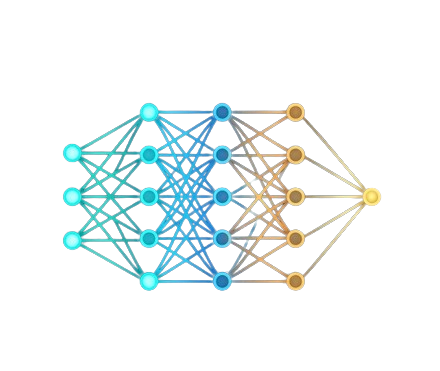
Fuzzy Logic Inference Engines and Fuzzy Logic Behavior Networks provide structured ways for artificial intelligence and control systems to handle imprecise, real-world data using degrees of truth rather than binary inputs. Fuzzy logic inference network function primarily as continuous mapping tools, taking ambiguous sensor inputs, applying a set of IF-THEN rules simultaneously, and generating smooth numeric outputs. They are critical in low level control loops, such as automated climate control, anti-lock braking systems, or motor speed adjustments where avoiding harsh, abrupt changes is essential for system stability.
Fuzzy body behavior network extend fuzzy reasoning into high level decision making by integrating fuzzy logic directly into Finite State Machines fuzzy logic behavior network. Instead of generating a continuous output value, Fuzzy logic behavior network evaluate fuzzy conditions to determine when an autonomous system should transition from one operational state to another. This is particularly vital in fields like robotics and game AI, where agents must manage complex, multi-stage behaviors (such as shifting from Patrol to Engage or Flee) without suffering from “flickering” state changes caused by rigid numerical thresholds.
The core comparison between the two lies in statefulness and control granularity. An fuzzy logic inference engine is inherently stateless, treating each time step independently to produce a continuous output based on current inputs. In contrast, an fuzzy logic behavior network is stateful, maintaining the agent’s current active mode while evaluating fuzzy transition rules to trigger discrete shifts in state. While an inference engine excels at precise, real-time control of individual variables, a behavior network excels at managing broader operational contexts and sequencing complex actions over time.
Fuzzy logic inference engines manage fine, continuous control of static variables, whereas fuzzy logic behavior networks orchestrate high-level, state-dependent decision-making. By combining the continuous reasoning of fuzzy logic with the structured transitions of state machines, Fuzzy logic behavior networks allow autonomous agents to execute complex, context-aware behavior transitions, while fuzzy logic inference networks ensure the low-level actions within those states remain smooth and precise.
Copyright © 2026 Scrut.Hut Game Studio, LLC. All Rights Reserved. Privacy Policy